Across seven regions of Uganda, communities are naming what they need and demanding the right to lead their own development. The Local Leadership Labs Discovery Stage, convened by CAPAIDS Uganda with support from CIVICUS and partners, has surfaced a defining truth: the people closest to the challenges hold the most credible solutions.
Background: What Are the Local Leadership Labs?
About the Local Leadership Labs (LLL) Project
The Local Leadership Labs (LLL) is a flagship initiative designed to catalyse sustainable, Locally Led Development (LLD) across Uganda. The project is funded by CIVICUS the global alliance of civil society and implemented through a consortium of civil society partners, with CAPAIDS Uganda serving as the National Convenor.
Launched in March 2024, the Labs operate on a Theory of Change rooted in four non-negotiables:
- Locally owned and locally led: communities set the agenda, not donors
- Context-specific solutions: no imported, one-size-fits-all templates
- Safe and inclusive dialogue spaces: every voice heard: women, youth, people with disabilities, local leaders
- Co-created processes: solutions built with communities, not for them
CAPAIDS Uganda, established in 2007 and headquartered in Kampala with a field presence in Lira's Home of Hope, brings over 17 years of community-centred programming across health, education, livelihoods, social protection and humanitarian response. As the National Convenor for the LLL project, CAPAIDS Uganda mobilised and coordinated 14 Civil Society Organisations (CSOs) spanning all seven regions of the country to lead the discovery and co-creation process.
The ambition is bold but grounded: transform how development is planned, funded, and implemented in Uganda by putting power, resources and decision-making in the hands of the communities who understand their context best.
The Scope: Who Was Reached?
The Discovery Stage was deliberately broad, mapping the civil society ecosystem across Uganda before zooming into lived community realities. The consultation reached:-
Stakeholders represented the full spectrum of civil society: women-led organisations, youth-led organisations, CSO networks, CBOs, NGOs at both national and district level, people with disability (PWD) led organisations, local governments, private sector actors and the media. Four complementary discovery tools were developed to build rapport, profile organisational geography and governance and obtain consent for participation.
From Communities to Commitments: Co-Creation in 7 Regions
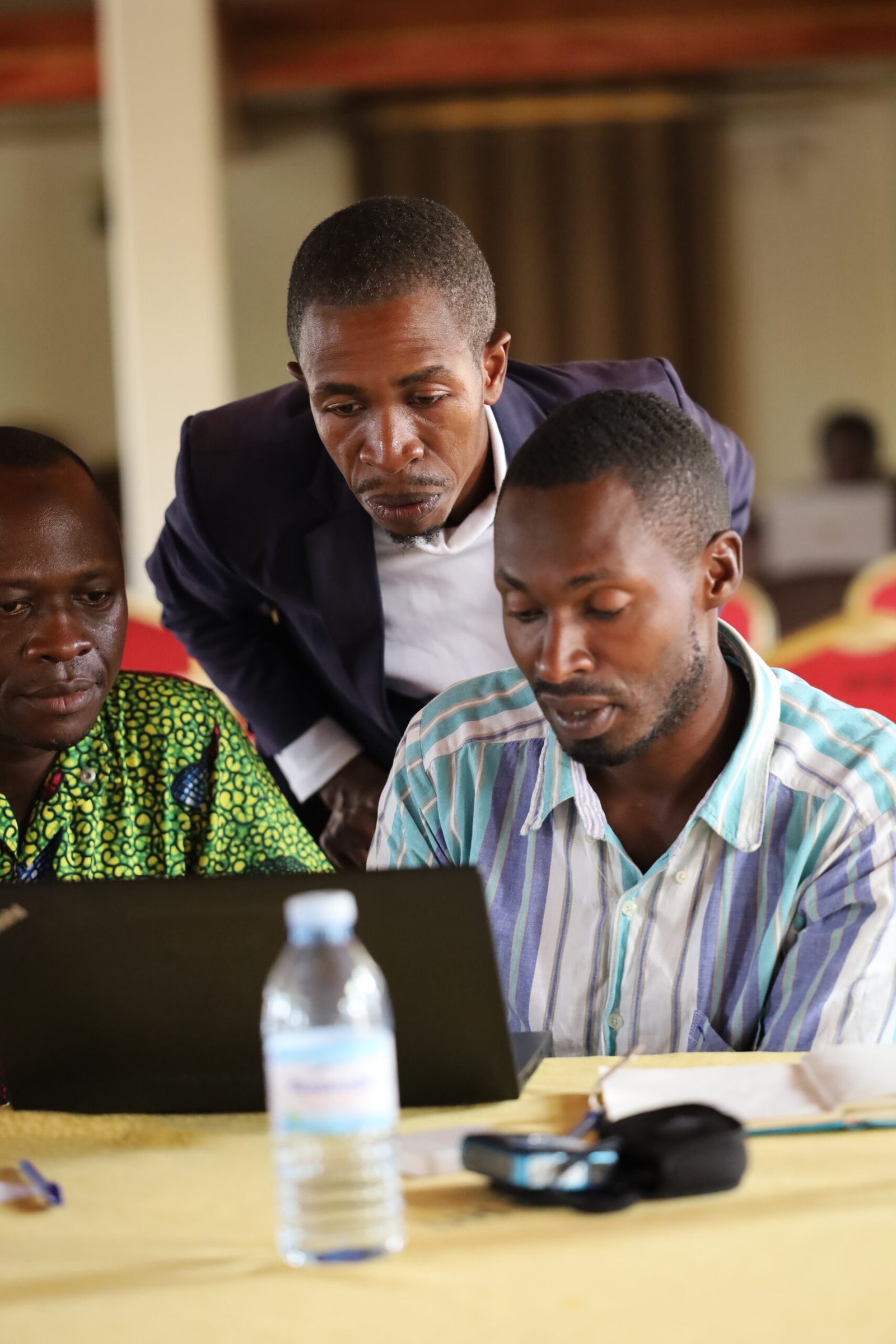
The 14 partner CSOs hosted CAPAIDS Uganda across seven regions in a community co-creation process that went far beyond consultation. These sessions practically engaged youth, women, men, local leaders and all affected populations, turning communities into safe, inclusive spaces that encouraged open dialogue and honest reflection about development realities on the ground.

Community co-creation sessions brought together youth, women, men, local leaders and affected populations in safe, inclusive dialogue spaces across Uganda's seven regions.
"The meeting strengthened our shared ownership of the process and translated ideas into actionable commitments as we realised the most needs being Health, WASH and Education."Masika Fatinah — Action Planning Meeting, Eureka Hotel, Kampala · 11 December 2025
On 11 December 2025, all 14 CSO partners convened at the Action Planning Meeting at Eureka Hotel, Kampala. The gathering validated proposed solutions from the co-creation sessions and translated community priorities into concrete, time-bound commitments. Health, WASH (Water, Sanitation and Hygiene) and Education emerged as the top three priority areas identified by communities.
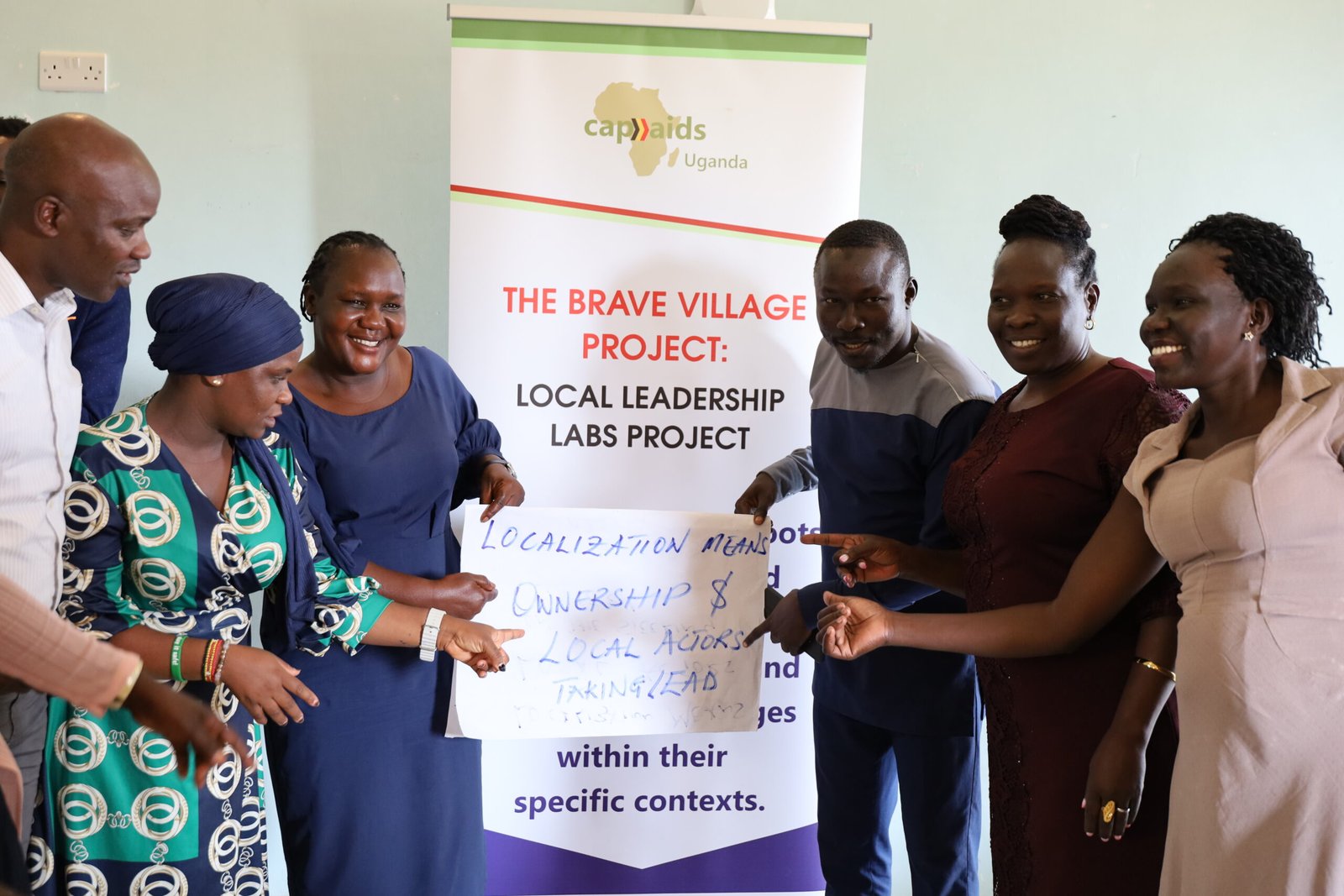
The 14 CSOs reviewed key issues and solutions identified during co-creation, agreeing on feasibility, roles and timelines.
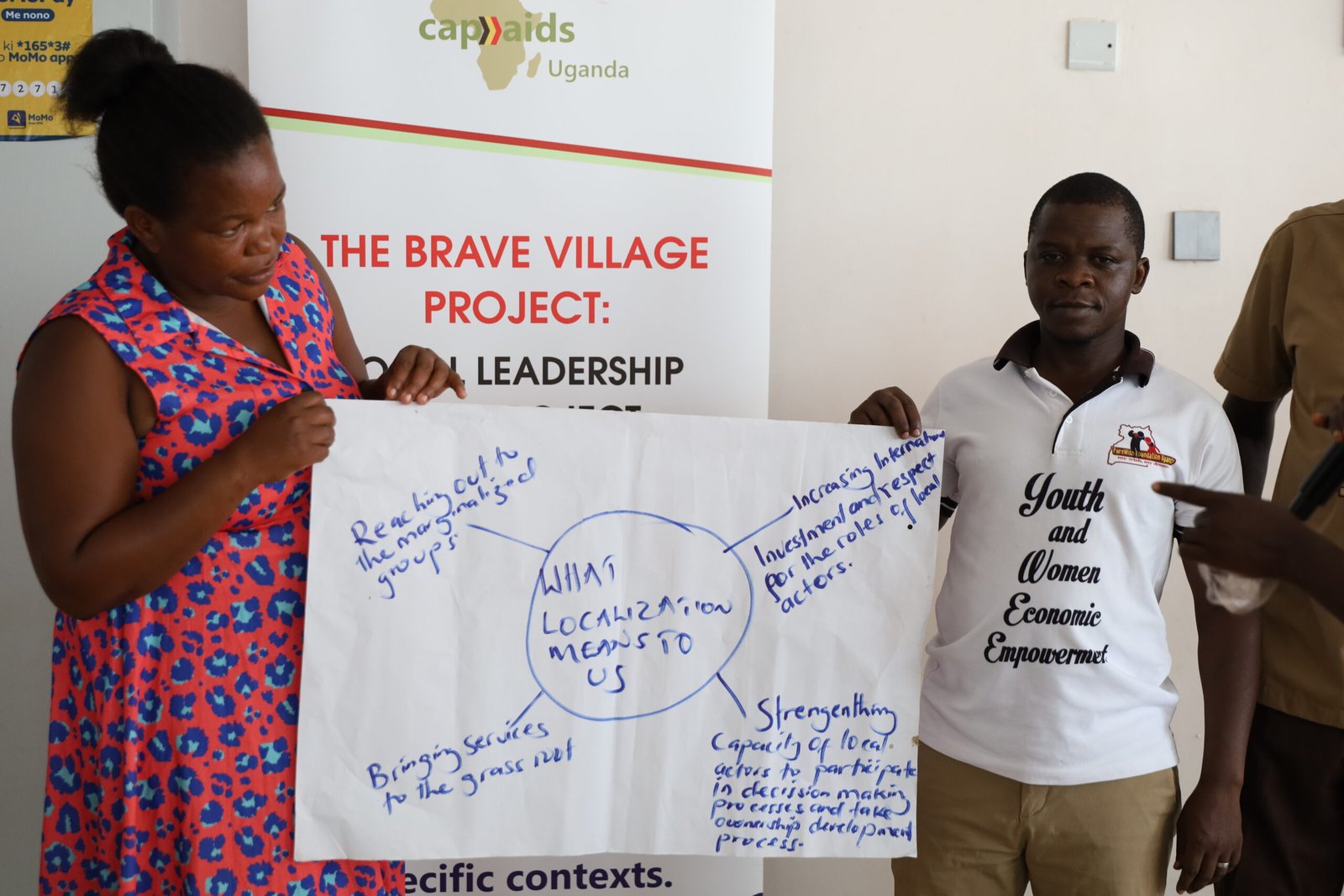
Following the co-creation sessions, participants reviewed the proposed solutions and discussed their feasibility, roles and timelines for implementation.
The follow-up meeting validated the participatory findings and agreed on practical next steps a deliberate process ensuring that community voices were not just collected but acted upon.
What the Data Reveals: Funding Structures That Keep Local Actors Out
Alongside community dialogues, the Discovery Stage conducted a structured assessment of how Local and National Actors (LNAs) are funded and how they relate to donors. The findings paint a stark picture of a system structurally misaligned with the principles of locally led development.
Overall Funding Mechanisms Across Local & National Actors
Status of Internal Cost Recovery (ICR) Among LNAs
Operational & Overhead Costs Covered by Donor Funding
Donor–LNA Relationship Dynamics
Voices from the Ground
The consultation deliberately centred the perspectives of practitioners navigating these structural barriers every day. Their words carry an urgency that statistics alone cannot:
"The best person with the right diagnosis is one facing the challenge and this is why the language and actions have to shift to Localization: shifting power to communities because they understand their own context through their local development lens."Mr. Albert Talemwa, Executive Director, LOSCOS (Human Rights Defenders, Kigezi)
"The strict eligibility criteria for donor funding eliminate most local organisations before we can even apply. The system seems designed to keep us out."Executive Director at a Community Based Organisation
"We have excellent programmes designed, but without sustainable funding, we are constantly in survival mode rather than growth mode."NGO Director at a Regional Organisation
"We face donor dictatorial character in every aspect. They come with dictated solutions to us implementers without understanding our context."Civil Society Representative in Uganda
Key Emerging Issues: A Region-by-Region Picture
Across all seven regions, five systemic challenges surfaced with remarkable consistency each with community-identified solutions ready to be acted upon:
Nature of Funding; Restricted & Tied Funding Cycles
The Situation
- Restricted, activity-tied funding that cannot flex to community needs
- Annual cycles with no administration or operational cost coverage
- Funding limited to core project activities only
Proposed Solutions
- Donors should practice joint planning and co-design with LNAs
- Shift to multi-year funding models
- Negotiate for operational and internal cost recovery
- LNAs to diversify through local philanthropy and social enterprise
Capacity Gaps; Fundraising, Negotiation & Governance
The Situation
- Limited fundraising capacities leaving organisations vulnerable
- Weak negotiation skills exploited by international intermediaries
- Board members unable to mobilise local resources
Proposed Solutions
- Build LNA capacity in local resource mobilisation
- Train in donor relationship management and negotiation
- LNAs to focus on mandated areas of expertise
- Strengthen board governance in resource mobilisation
Compliance & Shrinking Civic Space
The Situation
- Government registration bureaucracies overwhelming for local actors
- Policies limiting operational freedom, especially during elections
- Disproportionate compliance burden compared to INGOs
Proposed Solutions
- Evidence-based dialogue with government and local authorities
- Government to harmonise compliance requirements across all levels
- LNAs to advocate collectively while maintaining compliance
Transparency & Local Government Accountability
The Situation
- Local governments excluded from donor-funded project planning
- No clear definition of local government roles during project design
- Limited budget transparency with district-level stakeholders
Proposed Solutions
- Involve local government in planning and budgeting from the start
- Specify clear roles for local government in project implementation
- Strengthen District-Level Multi-stakeholder Coordination (DNMC) platforms
Limited Trust & Donor–Intermediary Practices
The Situation
- LNAs perceived as non-compliant and untrustworthy by default
- INGOs registering as local entities, crowding out genuine local actors
- Donors favouring specific organisations, stifling sector-wide growth
- Limited acknowledgement of LNA brands in reporting
Proposed Solutions
- LNAs to invest in robust financial systems and demonstrate impact
- Coordination dashboards to track INGO and local actor activity
- Donors to demonstrate transparency and equity at all levels
- Increase visibility and branding of LNAs in all reporting
Five Cross-Cutting Discoveries
Beyond the issue tables, the consultations surfaced five cross-cutting realities that the LLL project will need to address systematically:
Extensive regional and district CSO networks exist but are dramatically underutilised for locally led development a ready infrastructure waiting to be activated.
Most CBOs have outgrown their original sub-county mandates, now operating at district level but their funding and recognition have not kept pace.
Funding mechanisms across all regions actively prevent institutional growth organisations are funded to deliver activities, not to develop as institutions.
Marginalised groups particularly people with disabilities and human rights organisations face compounded barriers to both funding and service access.
District local governments hold enormous, largely untapped potential to anchor and sustain locally led development when genuinely included from the outset.
The Position Paper & Three Policy Asks
From the Discovery Stage emerged a formal Position Paper titled: "The Status of Locally Led Development in Uganda: Voices of Local and National Actors Visible & Valued in Locally Led Development."
The paper consolidates insights from last-mile actors across Uganda, providing a credible, community-grounded foundation for national advocacy and dialogue. It challenges development actors to move beyond prepackaged "best-fit" solutions toward practices rooted in local wisdom and expertise. The paper advances three major asks:
Quality Funding & Equitable Partnerships
Capacity Enhancement of Local & National Actors
Documentation & Investment in Existing Local Philanthropy
A Platform for Re-imagination
The Local Leadership Labs represent more than a project they are a safe platform for local and international intermediaries to collectively re-imagine, listen, learn, and unlearn from each other, while co-creating solutions for transformative locally led development. The goal is not to replicate siloed work at scale, but to scale what actually works: community-owned, context-specific, equitably resourced solutions. The Discovery Stage has laid the evidence base. The next phase is action.